Children’s Room Design: Fun, Safe, and Practicality
Designing a children’s room is more than just picking bright colors or fun furniture—it is both an art and a science that balances fun, safety, and practicality. Children need a space that provides comfort, stimulates their imagination, and is safe and easy to use. Whether you’re designing a modern bedroom, a playroom, or a multi-functional space, diligence is essential to meet a child’s needs perfectly.
In this article, we’ll explore key principles, ideas, and modern trends in children’s room design, along with practical tips for parents and designers to create a healthy, enjoyable, and functional environment.
Why Proper Children’s Room Design Matters
A child’s room is more than just a sleeping area; it is a learning, playing, and creativity space. Useful design can positively impact a child’s physical and mental development and help improve social and creative skills.
Key Benefits of a Well-Designed Children’s Room:
- Enhanced Comfort and Wellbeing – Choosing the right colors and materials reduces stress and increases feelings of security.
- Encourages Creativity and Learning – Thoughtfully designed play and study areas foster intellectual and social growth.
- Safety First – Using child-safe furniture, rounded corners, and non-slip flooring reduces the risk of accidents.
- Easy Organization – Smart storage solutions for toys and clothing keep the room practical and easy to maintain.
Core Principles of Children’s Room Design
- Colors and Psychological Impact
Colors significantly influence a child’s mood and energy levels. Some tips for color selection include:
- Bright colors like yellow and green promote energy and activity.
- Calm colors like blue and lavender encourage relaxation and sleep.
- Combining two or three colors can define zones in the room (sleep, study, play).
- Safety Comes First
When designing children’s rooms, ensure everything is safe for use:
- Furniture should be stable and non-tip.
- Avoid sharp edges or use corner protectors.
- Keep electrical wires out of reach.
- Floors should be non-slip and easy to clean.
- Functional Space Planning
An ideal children’s room usually contains three main zones:
- Sleeping Area – Comfortable bed in an appropriate size with safe bedding.
- Play Area – Open space with soft flooring or rugs for games and activities.
- Study Area – Desk and chair suitable for work, with shelves or drawers for organization.
Creative Ideas for Children’s Rooms
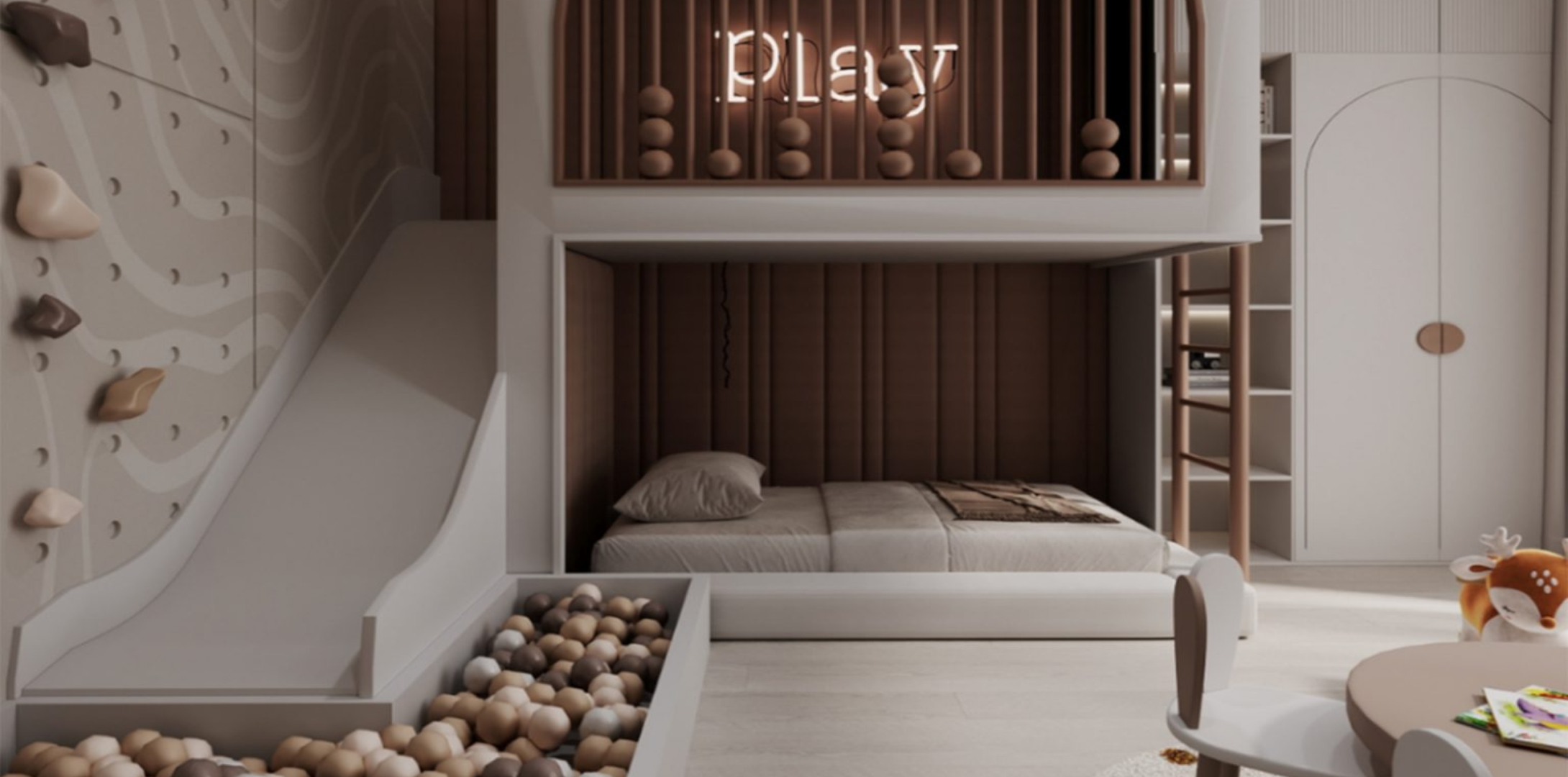
- Innovative Multi-Functional Beds
- Beds with built-in storage underneath for toys and books.
- Bunk beds for siblings to save space.
- Beds shaped like houses, cars, or ships to add a playful element.
- Smart Storage Solutions
- Open shelves and colorful bins make toys easy to access.
- Foldable boxes for storing items when not in use.
- Underbed or desk drawers are excellent space-saving solutions.
- Interactive Walls
- Paint one wall with chalkboard or magnetic surfaces for drawing and learning.
- Use educational or cartoon wallpaper to make the room fun and inspiring.
- Proper Lighting
- General ceiling light to illuminate the entire room.
- Small reading lamps near the bed.
- Warm nightlights for a cozy bedtime atmosphere.
- Safe Technology Integration
- Smart devices for child monitoring, such as cameras or temperature controls.
- Small educational screens are safely out of reach.
Modern Trends in Children’s Room Design
- Sustainable Rooms
- Use eco-friendly and natural materials like recycled wood, organic fabrics, and non-toxic paints.
- Minimize plastics and harmful chemicals.
- Multi-Functional Design
- Rooms that transform from a bedroom to a playroom easily.
- Adjustable beds, desks, and flexible spaces for raising children.
- Incorporating Nature
- Add child-safe indoor plants.
- Use nature-inspired colors such as green, blue, and brown.
Practical Tips for Parents
- Involve the Child – Let your child choose some colors or wall art to encourage engagement.
- Think Long-Term – Select furniture that grows with the child to save money and effort.
- Keep It Simple – Avoid overcrowding the room with decor and toys for easier movement and cleaning.
- Natural Ventilation and Light – Ensure large windows for daylight and fresh air.
Conclusion
Designing children’s rooms requires a delicate balance of fun, safety, and practicality. By using the right colors, multi-functional furniture, proper lighting, and dedicated play and study zones, you can create a space that stimulates imagination and develops skills in a safe and healthy environment.
Integrating modern trends like sustainable materials, smart technology, and flexible layouts ensures that the room becomes the perfect environment for growth, learning, and playing.